



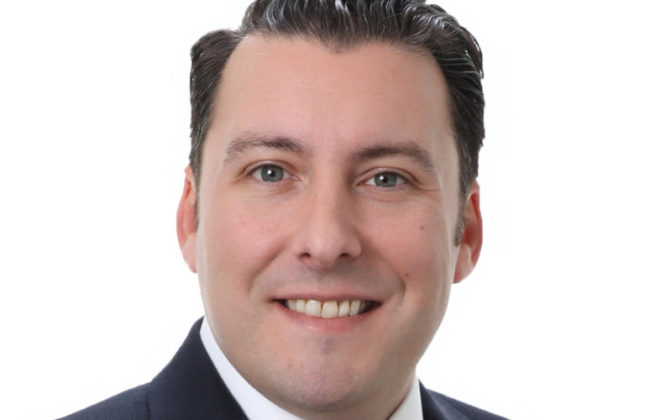
In a conversation with Arthur Rothrock on The Litigator's Path, Ash explains how he built a specialized eminent domain practice after 15 years on the government's side of takings cases, why he switched to representing property owners, and how he and his partner took over the firm as equity partners in 2022. He also walks through how he uses Google Earth as a courtroom demonstrative tool, why he refuses to outsource exhibit production, what his referral-fee strategy looks like under New Jersey's certified trial attorney rules, and how he plans to hire a tax court clerk as a stepping stone to attracting a future partner. The common thread: in a practice area where almost nobody sets out to specialize, the attorneys who stick around long enough – and position themselves correctly – can claim an outsized share of the market.
How Ash Uses Google Earth Flyovers and Visual Demonstratives to Win Eminent Domain Trials
Eminent domain trials turn on fair market value, and fair market value depends on comparable sales. Ash has found that one of the most effective ways to make that concept land with a jury is to show them, physically, where those comparables sit relative to the subject property in real estate and property litigation. His tool of choice is Google Earth's video recording feature, which allows him to create 3D flyover simulations from one property to the next.
If his appraiser selected four comparable sales in the same neighborhood, the flyover makes that proximity obvious. If opposing counsel's expert used sales scattered across three towns and a county 50 miles away, the same flyover exposes the distance. "If you can bring a little bit of that CSI magic to a real estate case," Ash said, "it can keep things interesting."
He also relies heavily on Google Earth's historical satellite imagery to show how land use patterns in a neighborhood have changed over time – useful when zoning shifts are central to a valuation argument. New Jersey courts have taken judicial notice of Google Earth as a business tool, making its imagery admissible without a lengthy foundation fight. And it costs nothing.
Ash has watched opposing counsel struggle in real time with outsourced demonstrative services – vendors who couldn't turn revisions around fast enough when trial strategy shifted mid-proceeding. That experience convinced him to keep full control over his own exhibits. For attorneys handling their own motions and exhibit preparation without dedicated support staff, that same principle of internal control over work product applies to every stage of the file. "I don't want to cede control over the ability to make or revise them as needed," he said. His view: higher production quality isn't worth the loss of flexibility when a trial plan changes after the first day of testimony.
Beyond visuals, Ash pressure-tests his trial presentations by explaining the case to his children, ages 10 and 14. If they can follow the concepts, a jury likely can too. He feeds their questions back to his expert witnesses to make sure testimony avoids the "esoteric phrases of appraisers" that lose jurors.
Why Ash Switched from Government Eminent Domain Work to Representing Property Owners
For 15 years, Ash represented government entities – departments of transportation, pipeline companies, municipalities – at a mid-sized New Jersey firm. The political relationships held by senior partners fed him a high-volume caseload, and at one point he estimates he was, by sheer case count, the busiest eminent domain attorney in the state.
But the pattern he kept seeing in courtrooms planted a seed. Property owners in eminent domain cases tend to do well at trial because juries have zero sympathy for the government. Ash framed it in classical terms: as a government attorney in a takings case, "you have absolutely zero pathos." The money, and the emotional weight, always sat on the other side of the table.
In late 2018, Scott Heiart – an attorney Ash had opposed on multiple eminent domain cases over the years – called and asked if he had ever thought about switching sides. Ash had. He left the mid-sized firm, joined Heiart's practice, and began representing property owners exclusively. By 2022, the firm's senior partner retired, and Ash and Heiart became the equity partners at what is now Carlin Ward Ash & Heiart LLC.
The transition was smoother than a cold start would have been. Ash brought client relationships with him, and the existing firm gave him infrastructure to plug into immediately. He also expanded the firm's tax appeal practice, which he saw as a natural complement – the same core skill set of working with appraisal experts and cross-examining valuations, applied in a different forum.
Ash's Referral-Fee Strategy and Why Attorney Referrals Drive His Eminent Domain Practice
Carlin Ward Ash & Heiart does not spend heavily on marketing. The firm's primary source of new matters is attorney referrals, and Ash has a structural advantage that makes those referrals easier to close: his certified civil trial attorney designation from the New Jersey Supreme Court. Under New Jersey rules, that certification allows him to pay referral fees to other practicing attorneys – something most lawyers in the state cannot do. Ash believes only one other eminent domain practitioner in New Jersey holds the same certification.
The referral pipeline works two ways. Sometimes another attorney has a client who encounters an unexpected eminent domain issue or tax appeal and needs a specialist. Ash steps in as co-counsel, preserving the referring attorney's client relationship while handling the specialized litigation. Peter Bochnewich describes a structurally similar referral dynamic in probate, where estate planning attorneys send contested trust matters to litigators who can try the cases they drafted the documents for. Other times, the referring attorney hands the case off entirely and receives a fee. His best referral sources tend to be larger real estate practice groups at bigger firms – teams that handle transactional and land use work but lack eminent domain or valuation litigation expertise.
Beyond referrals, Ash focuses on SEO to capture property owners who receive a government acquisition letter and Google "eminent domain New Jersey." The firm updates its website with recent case results to maintain search visibility. But paid advertising plays almost no role in the practice – the niche is small enough that reputation and relationships carry the weight.
How Ash Plans to Hire a Tax Court Clerk to Grow the Firm Strategically
With all three attorneys operating at what Ash estimates is 110% capacity, the firm is adding a fourth lawyer. But rather than hiring laterally or bringing on a general associate, Ash is targeting a clerk finishing a term in New Jersey's Tax Court – a court of special jurisdiction that handles real estate tax appeals exclusively.
The logic is layered. A former tax court clerk arrives with subject-matter knowledge in the area where the firm most needs bandwidth. They also bring relationships with other clerks who will land at competing firms, creating a built-in referral network. And Ash sees the hire as a recruiting tool for the firm's next phase: a partner-level attorney who would be attracted by the prospect of having a former tax court clerk service their clients' tax appeal needs.
The firm's first offer to a clerk fell through – the candidate accepted and then reversed course the same day Ash recorded this episode. He had already contacted the tax court secretary for another resume and planned to interview a new candidate within days. The speed of the pivot reflects the firm's broader hiring philosophy: don't wait until you have a full caseload to justify the hire. "If everybody's just a little bit too busy" and "you feel like you could do a little bit better for clients," Ash said, "that's the point where you hire."
Why Ash's Partner Runs the Business So He Can Focus on Clients and Cases
Ash is direct about the division of labor at his firm: his partner, Scott Heiart, handles all administrative functions – banking, firm management, operations – while Ash focuses on client development, case work, and external visibility like seminars and conferences. Ash describes Heiart as someone who could run a 250-lawyer firm with the same effort he puts into a three-person shop.
That arrangement gives the firm a platform that can absorb growth without operational strain. A new attorney can "bring their work, plug right in," and the infrastructure is already in place. It also frees Ash to be the firm's outside-facing partner – attending conferences, speaking at industry events, and maintaining the relationships that feed the referral pipeline.
The partnership works, Ash acknowledges, in part because the two attorneys built trust through years of opposing each other in litigation before ever sharing a letterhead. They talk through every significant decision, and Ash says they have never had a serious argument. The downside of that chemistry: both partners are cautious about adding a third equity member who might disrupt the dynamic. For now, that caution is a luxury they can afford – the firm is busy enough to be selective about who joins, but not so overwhelmed that they need to rush.
What Litigators Can Take Away
-
Ash tests every trial presentation on his 10- and 14-year-old children before putting it in front of a jury. Their questions tell him exactly where an expert's testimony will lose a layperson, and he feeds that feedback directly to his witnesses.
-
Google Earth's flyover video feature and historical satellite imagery are free, admissible in New Jersey courts, and effective enough that Ash has never needed to hire a demonstrative services vendor for his eminent domain trials.
-
Ash keeps all exhibit production in-house specifically because he has watched opposing counsel lose flexibility mid-trial when an outsourced vendor couldn't turn revisions fast enough. Control over demonstratives matters more than production quality when strategy shifts on day two.
-
In a niche practice area, the most reliable growth strategy may be patience: Ash sees his biggest future opportunities coming not from marketing spend but from competitors in the eminent domain bar who are a generation older and approaching retirement.
-
Ash hired before the firm had a full caseload to justify a new attorney – his threshold was that all three lawyers were at 110% capacity and occasionally had to choose one client over another on a given day. Waiting for a complete caseload, in his view, means you have already waited too long.
Listen to the Full Episode
Michael J. Ash covers more ground in the full conversation – including the quirks of Massachusetts land court, how Boston's 400-year-old deed descriptions led him into litigation, and why he thinks AI image generation may be more useful to lawyers right now than AI legal research. Listen on Spotify or Apple Podcasts. Learn more about Ash's practice at carlinward.com.