



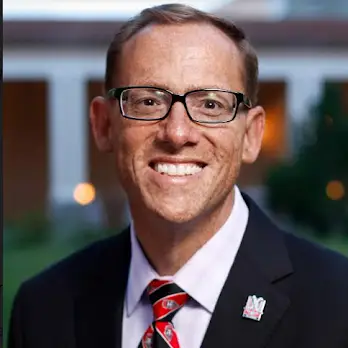
In a conversation with Arthur Rothrock on The Litigator's Path, Colón explains how he grew Singleton Schreiber's New Mexico operation from a single attorney to a multi-office team in under three years, why the firm's employee benefits package mattered more to him than his own partnership agreement, how the firm handles tens of thousands of mass tort clients without treating them as "inventory," and what role political engagement and philanthropy play in a plaintiff's firm's long-term strategy. The through line: a plaintiff's practice that wants to last has to invest in people, community, and public policy with the same discipline it brings to litigation – and the firm's checkbook should prove it.
How Brian Colón Built Singleton Schreiber's New Mexico Presence from Zero to Multi-Office in Three Years
When Colón came on board in 2023, Singleton Schreiber had one attorney in New Mexico – Jacob Payne, a former DA’s office prosecutor who had transitioned into wildfire litigation. There was no office space. The firm had entered the state to represent victims of the Hermit’s Peak/Calf Canyon Fire, the largest wildfire in New Mexico history, which burned 341,000 acres of land that included multi-generational land grants. Colón was hired to turn that initial foothold into a permanent operation.
Three years in, the firm has offices in Albuquerque, Mora, Las Vegas, and is opening locations in Las Cruces and Farmington. Colón’s team numbers a few dozen people across the state. His hiring philosophy is simple and deliberate: every person on his New Mexico team either had a personal relationship with him before joining or knew someone already on the team. "When they walk in that front door, they know how crazy this guy is about serving community," Colón told Rothrock. That filter has allowed him to scale without diluting the firm’s culture – a challenge he acknowledges gets harder as headcount grows.
The firm’s growth in New Mexico mirrors a broader national expansion. Singleton Schreiber now has offices in California, Hawaii, Colorado, Oregon, Washington, Mississippi, and Alabama. In many cases, the firm entered a new state through disaster litigation – wildfire, environmental contamination – and then stayed to build a full-service plaintiff’s practice. In Hawaii, the firm is the largest representing victims of the Lahaina Fire. In New Mexico, what began as wildfire work has expanded into personal injury, environmental litigation, and mass torts.
Why Colón Refuses to Call Mass Tort Clients "Inventory" – and What That Means for Case Management
Singleton Schreiber sits on leadership committees for several major mass tort actions, including the PFAS litigation against DuPont, 3M, and 35 manufacturers of aqueous film-forming foam (AFFF), as well as the hair relaxer cases. The firm also represents school districts in social media litigation against Meta, TikTok, and YouTube. Its first jury verdict against Tesla – a $234 million result in Miami – made headlines as the first of its kind.
With tens of thousands of clients across wildfire, environmental, and product liability cases, the pressure to treat large dockets as a numbers game is constant. Colón draws a hard line against it. He calls the word "inventory" something that "should be banned from our profession," and describes sitting through CLE panels where colleagues used the term casually to refer to client portfolios. His view is that the language shapes the behavior: once clients become inventory, settlement discussions start optimizing for attorney convenience rather than client outcomes.
He points to partner Danielle Ward Mason’s work on hair relaxer cases as an example. Many firms declined to represent women whose injuries were fibroids rather than uterine cancer, viewing the science as weaker and the cases as less valuable. Ward Mason took them on. Partner Alicia Zimmerman, who manages tens of thousands of wildfire victim cases, operates with the same principle – every client gets individualized attention regardless of the docket’s size.
Colón also describes a dynamic that plays out in leadership committee meetings during settlement discussions: when his partner Paul Starita pumps the brakes on proposed settlement structures to protect client interests, it costs the firm status with co-counsel. "When you pump the brakes in those leadership meetings," Colón says, "you’ve just lost some status at that table." The firm accepts that trade-off as a cost of doing business.
The Employment Agreement That Closed the Deal: How Singleton Schreiber Recruits Through Benefits
When Singleton Schreiber recruited Colón after his loss in the 2022 attorney general primary, the firm offered a generous partnership agreement and an equally generous offer letter. Neither is what convinced him to sign. Instead, Colón asked to see the standard employment agreement – the one offered to receptionists, paralegals, and file clerks.
What he found: 100% employer-paid healthcare, child care reimbursement, and a $1,000 annual match for employee donations to the nonprofit of their choice. The child care benefit stood out to Colón in particular. "That’s how you get single parents back in the workforce," he said. "That’s how you get women in the workforce. That’s how you get women of color in the workforce." If every employee took advantage of the nonprofit match alone, the firm would write an additional $250,000 to $500,000 in charitable contributions annually.
For attorneys evaluating firms – whether as lateral hires or as new associates – Colón’s approach offers a concrete due diligence tip: skip the marketing materials and ask for the employee handbook. The benefits package tells you more about a firm’s values than any recruitment pitch.
Why Colón Believes Plaintiff’s Firms Must Invest in Politics, Philanthropy, and Public Policy
Colón does not compartmentalize his political identity from his professional one. He is open about his Democratic Party affiliation, his political history, and his belief that plaintiff’s attorneys have an obligation to engage in the public policy process. His argument is structural: insurance companies backed by private equity firms like Berkshire Hathaway and Blackstone are actively working to limit jury awards through tort reform, damage caps, and restrictions on civil justice access. If personal injury and other plaintiff’s attorneys do not participate in the policy process, their clients lose before they ever reach a courtroom.
This transparency has cost the firm at least one significant engagement – a large public entity that declined to hire Singleton Schreiber because of Colón’s political profile. Firm founder Gerald Singleton’s response: "We live to fight another day. And we don’t want to work for a single client that doesn’t want us to be their champion." Colón frames the math as a net positive. The clients who hire the firm know exactly what they are getting, and the team members who join know exactly what they are signing up for.
The firm backs this philosophy financially. In New Mexico, Singleton Schreiber is one of only two law firms – and the only plaintiff’s firm – at the top donor tier for Equal Access to Justice. The firm also contributes at significant levels to the New Mexico Trial Lawyers Association and the Safety Over Profits initiative related to the medical industry. Colón sees these expenditures not as marketing but as mission-critical overhead. "If you want your client who’s been injured to have access to the civil justice system," he told Rothrock, "then you better be involved in public policy."
How Singleton Schreiber Uses a Full-Time Social Worker to Address Trauma Transfer in Plaintiff’s Litigation
One of the more unusual elements of the firm’s operating model is the employment of a full-time licensed social worker. The role serves two functions: providing trauma-informed support to clients and providing mental health resources to the firm’s own team members.
Colón describes the rationale in practical terms. His attorneys sit across the table from wildfire survivors who lost 14 generations of family land, from widows whose husbands were killed by gun violence, from families dealing with medical malpractice deaths. "There is no way not to have residual trauma when you’re sitting down with people every day that have buried loved ones," he says. Matthew Bourhis addresses this emotional weight differently, drawing a hard line between the adversarial litigation persona and the collaborative mode required to sustain working relationships inside the firm and with referral partners. The social worker helps the firm deliver what Colón calls "trauma-informed service" – an approach that treats client emotional needs as part of the representation, not separate from it – while also giving staff a resource to process the secondary trauma that accumulates over time.
For solo and small-firm practitioners who cannot afford a dedicated social worker, the underlying principle still applies: attorneys handling catastrophic injury and wrongful death cases absorb emotional weight that affects both their well-being and their effectiveness. Building some form of mental health infrastructure – even if it is an outside therapist or a peer support arrangement – is not a luxury but a practice management decision.
What Litigators Can Take Away
-
Ask to see the employee agreement, not the partnership offer. Colón evaluated Singleton Schreiber’s values by reviewing the benefits package offered to receptionists and paralegals – 100% healthcare, child care reimbursement, and nonprofit donation matching – rather than the terms offered to him personally. It is the fastest way to determine whether a firm’s stated values are reflected in its spending.
-
Ban the word "inventory" from your practice vocabulary. Colón argues that referring to mass tort clients as inventory creates a mindset that optimizes for attorney convenience over client outcomes, and that this language creep eventually shows up in settlement negotiations where it matters most.
-
Hire through personal networks to protect culture during rapid growth. Every member of Colón’s New Mexico team either knew him personally or knew someone already on the team before joining. This filter allowed the office to scale from one attorney to a multi-office operation in three years without losing cultural alignment.
-
Treat political and public policy engagement as a business expense, not a personal hobby. Colón’s position is that plaintiff’s attorneys who do not participate in the policy process are ceding ground to insurance-industry-backed efforts to cap damages and restrict jury access – which directly affects client outcomes and firm revenue.
-
Build mental health infrastructure before you need it. Singleton Schreiber employs a full-time licensed social worker to serve both clients and staff. Solo practitioners handling catastrophic injury cases should consider that some version of this investment – even at a smaller scale – is a practice sustainability decision, not an optional perk.
Listen to the Full Episode
Brian Colón’s conversation with Arthur Rothrock covers his full arc from growing up in poverty in Valencia County, New Mexico, to building a multi-office plaintiff’s operation for a national firm – along with the specific systems, hiring strategies, and financial commitments that made it work. Listen on Spotify or Apple Podcasts, and learn more about how Legion helps litigators draft pleadings, discovery, and motions at legion.law.