



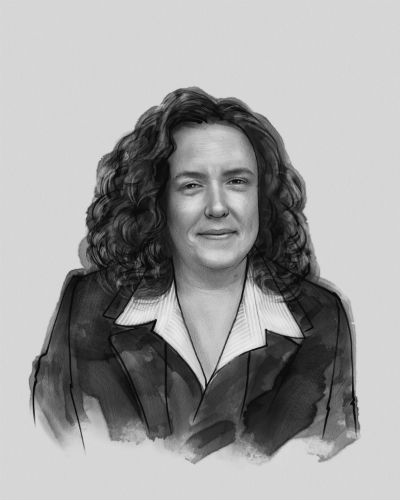
In a conversation with Arthur Rothrock on The Litigator's Path, Diemer explains why she evaluates every case through a collectability lens before she takes it – and how prejudgment writs of attachment can turn an unsecured creditor into a secured one before a bankruptcy filing wipes out the judgment, why she commits to one business development task every day no matter how small, how she routes lower-stakes collection matters to junior associates to build real courtroom experience fast, and why all-hourly billing with transparent invoicing is the foundation of client trust in her practice. The thread running through it all: bankruptcy litigation rewards the attorneys who think like financial strategists from the first client call – not just at trial.
Why Diemer Builds Every Case Around Collectability, Not Just Winning
Most litigators ask whether they can win. Katie Diemer asks whether there will be money to collect when they do. Her firm, Diemer & Wei, specializes in disputes involving financially stressed companies – supply chain fights, board disputes, business litigation, VC litigation, failed mergers, landlord-tenant conflicts that threaten a business's survival – and she approaches each one with the same threshold question: "Is this going to be worthwhile?"
That framework comes from spending her entire career watching parties race to bankruptcy court to escape judgments. Diemer's firm runs a dual practice: pure commercial litigation on one side and creditor-focused bankruptcy work on the other, with a target split of 70% creditor representation and 30% debtor work. The bankruptcy side taught her that a judgment is just a piece of paper if the defendant can discharge it. "I don't think people come to me because they want a piece of paper," she told Rothrock. "They come to me because they want cash."
One of the firm's distinguishing tools is the prejudgment writ of attachment. By obtaining a writ early in litigation, Diemer's team can record it and file a UCC-1 financing statement, effectively converting their client from an unsecured creditor to a non-consensual secured creditor. If the opposing party later files for bankruptcy, secured creditors get paid ahead of unsecured creditors and other claimants. It is a tactical move that most pure litigators never consider because they are not thinking about the bankruptcy endgame from day one. Garrick Hollander describes similar front-end analysis – evaluating a potential debtor's assets and financing prospects before ever accepting the engagement – as the discipline that separates durable Chapter 11 practices from those that get burned by insolvent clients.
The firm also handles Perishable Agricultural Commodities Act (PACA) litigation – roughly 10 to 15% of its caseload – a specialty practice with its own procedural rules that serves the agricultural economy around San Jose.
How Diemer Generates Referrals Through One Daily Business Development Task
Diemer commits to completing at least one business development task every day. It does not have to be large. Some days it is as simple as calling a colleague she has not spoken to in months. Other days it is preparing a continuing legal education presentation or attending a bar event. The principle came from a story she heard at a Brown University reunion, where a CEO of a major luxury brand described being told by a mentor that going to lunch with people matters more than checking items off a to-do list. The lesson stuck: relationship building is not a distraction from the work – it is the work that keeps the pipeline full.
Her most productive referral source for years was a beer league ice hockey team. Diemer played varsity ice hockey at Brown and continued playing once or twice a week through the pandemic. On the team, she was the only woman and one of a few lawyers. Teammates came to her with legal questions, she took the time to answer them, and they referred business from the companies where they worked. One teammate at a large law firm realized that his firm could not cost-effectively handle $100,000 to $200,000 collection matters and began sending that work to Diemer's firm. CPA firms followed. A single placement on a referral list opened an entire category of business.
Her advice to attorneys who feel they have no time for business development: set a phone timer for 15 minutes a day. Over seven days, that is more than two hours of focused effort that did not exist before. "We can all do something for 15 minutes a day," she said.
Diemer's Approach to Training Associates on Lower-Risk Collection Matters
Diemer & Wei currently has four associates and one senior attorney. Rather than limiting junior lawyers to document review on eight-figure cases, Diemer routes smaller collection matters and judgment enforcement work – order of examination hearings, small breach of contract actions, post-judgment discovery – to newer associates and gives them ownership of the file.
The logic is straightforward: a first- or second-year associate should not be the lead on a $20 million case, but they can handle an order of examination on a judgment someone else obtained. They get live courtroom experience, learn to question witnesses, review financial documents, and manage a matter from intake through resolution. It builds confidence and a usable skill set at what Diemer calls "a less high-risk proposition." The collection work itself came from the referral pipeline she built through personal relationships, which means the same business development strategy that feeds the firm also creates the training ground for the next generation of lawyers in it.
Diemer also reframes propounding discovery for associates who find it tedious. She treats it as a scavenger hunt – the opposing party is trying to hide things, and the associate's job is to find them. Tax returns, in particular, are her favorite weapon. "There's nothing more revealing than a tax return," she said, and in commercial litigation, confidentiality agreements on the state side and standard federal practice usually make them obtainable.
From Pre-Med at Brown to Public Defender to Founding a Bankruptcy Litigation Firm
Katie Diemer did not plan to become a lawyer. She grew up in a family of physicians – her grandmother was one of the first women doctors in the country and served as Teddy Roosevelt's family pediatrician, her grandfather was Roosevelt's family orthopedic surgeon, and her father was a cancer researcher. Diemer went to Brown University fully intending to become a pediatrician. She completed the pre-med curriculum, qualified for a clinical research rotation at Rhode Island General Hospital, and immediately called her grandmother to report that it was, in her words, the grossest thing she had ever seen. Her grandmother told her there were plenty of ways to help people that did not involve being sick in the corner of someone's hospital room.
Diemer pivoted to a double major in English and classics with honors and simultaneously earned a master's in teaching – all in four years. A professor then signed her up for the LSAT without telling her. He called her into his office on a Friday, told her to consider law school, and when she agreed, informed her the test was the next morning. He had already cleared it with her ice hockey coach and sharpened the pencils. She went to Washington University in St. Louis, spent a summer doing transactional work at a large firm in Los Angeles, then took a clinical placement with the St. Louis public defender's office. Within five days, she knew she was a litigator.
After five years as a public defender, she moved to California – her husband, a software engineer she met her freshman year at Brown, was working in Silicon Valley – and practiced at several large and mid-size firms before founding her own. The firm is now 21 going on 22 years old. Her current partner, Julia Wei, is a longtime friend who joined after earlier partners retired or passed away. When Diemer originally left to start the firm, she sent a joint letter to over 30 clients. Every single one followed her.
Why Diemer Runs an All-Hourly Practice and How She Structures Retainers
The firm does no contingency work. Diemer bills entirely by the hour, and every invoice meets the specificity standards required by bankruptcy court – a discipline she applies to all clients, not just those in reorganization proceedings. She sets initial retainers at approximately two months of estimated work, then requires a separate trial retainer midstream if the case does not resolve. She does not ask clients to front the full estimated cost at the outset.
Diemer is blunt with clients about cost from the start, and she expects the same directness in return. She tells every client that if they are not comfortable questioning a bill, they are probably not comfortable asking their lawyer other important questions either. "If you can't ask about that," she said, "you're probably not that comfortable asking them other questions that you have." It is a standard she ties to the broader client relationship: billing transparency is the baseline for trust, and trust is what keeps a client communicating the information a litigator needs to avoid surprises.
What Litigators Can Take Away
-
Diemer evaluates every potential case not just on the merits but on whether the opposing party has assets to pay a judgment – and uses prejudgment writs of attachment to convert unsecured positions into secured claims before a bankruptcy filing can wipe them out.
-
She commits to completing one business development task per day, no matter how small – a phone call to a former colleague, a CLE presentation, attending a local event – and credits that habit with building the referral pipeline that sustains a seven-attorney firm.
-
Rather than reserving courtroom experience for senior lawyers, Diemer assigns smaller collection matters and post-judgment enforcement work to junior associates so they get live witness examination, court appearances, and full file ownership at lower stakes.
-
She sets client expectations about litigation timelines in the first meeting by asking how long they think the case will take, then correcting against reality – a construction trades client who says "three months" needs a very different conversation than someone from the actuarial industry who is used to longer horizons.
-
When evaluating whether to leave a firm and start her own, Diemer applied a simple pros-and-cons framework: she listed what she liked and disliked about her current practice, then looked for a structure that maximized the pros and minimized the cons – a method she now recommends to any attorney feeling stuck.
Listen to the Full Episode
Katie Diemer's full conversation with Arthur Rothrock covers bankruptcy billing under the Knudsen rule, the cultural dynamics of a six-and-a-half-week trial with 18 defendants, and her advice for women attorneys navigating bias in litigation practice. Listen on Spotify or Apple Podcasts. To learn how Legion helps litigators draft pleadings, discovery, and motions in minutes, visit legion.law.