



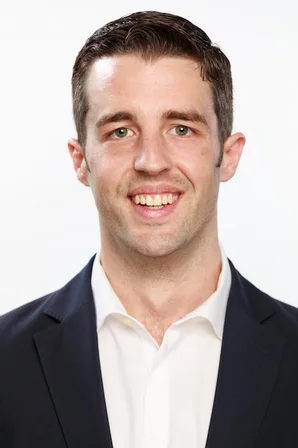
In a conversation with Arthur Rothrock on The Litigator's Path, Begakis explains how his litigation background made him a better transactional attorney by teaching him how contracts actually get tested, how he built a client base representing YouTubers and influencers before most firms recognized that market existed, why he structured AltView Law Group around flat fees and commission-based billing instead of the hourly model, and what his first hire taught him about delegation. The thread running through it all: the attorneys who build durable entertainment practices are not the ones who wait for the market to find them – they specialize early, price for loyalty, and build a firm that does not depend on any single partner's reputation to survive.
How Begakis Uses Litigation Experience to Draft Better Entertainment Contracts
Most entertainment transactional attorneys learn contract drafting in a vacuum – negotiating terms without ever seeing how those provisions hold up in court. Begakis came at it the other way around. His first seven or eight years in practice were spent grinding through civil litigation at a small firm, and that background shapes how AltView approaches deal-making today.
The clearest example is indemnification language. Begakis points out that many transactional lawyers treat indemnification clauses as boilerplate – "you're indemnified, done, end of analysis" – without considering how those provisions actually get litigated. Questions about whether a party must fund a defense upfront or only after final resolution, and who selects counsel, are the kinds of details that determine how a dispute plays out. Having litigated those provisions, he drafts them with the courtroom in mind.
Arbitration clauses are another area where his dual perspective pays off. Whether the interpretation of the arbitration language is itself subject to arbitration or must be resolved in court first, what rules the arbitrator must follow, and how the proceeding is commenced – these are decisions baked into contract language that many transactional attorneys treat as fill-in-the-blank. Begakis treats them as strategic choices because he has seen how "a difference in language can have a big effect" once parties are actually in a dispute.
The benefit runs both directions. On the litigation side, AltView takes the position that a lawsuit is "a means to an end" – one stage in a longer negotiation. Because 99% of civil matters settle, Begakis says his team tries to be "strategically combative," avoiding bridge-burning that would undermine the eventual resolution. That transactional mindset – always thinking about the exit strategy – makes the firm's litigation approach distinct from shops that treat every motion as a battle.
How Begakis Found His Niche Representing YouTubers and Influencers Before the Market Existed
Begakis graduated law school in 2011 into one of the worst legal hiring markets in decades. He was not at a top-tier school, and the big firms were not calling. He landed at a small civil litigation shop in Los Angeles that gave him one thing the large firms would not have: the freedom to bring in his own clients.
That freedom coincided with a moment in digital media that, in hindsight, was a wide-open field. In 2011, Netflix was still two years away from producing original content. YouTube creators were a small, collaborative community, and most of them knew each other. A high school friend making man-on-the-street videos for YouTube came to Begakis with a legal issue, and Begakis realized there might be a client base among these early creators – people who needed legal help but were not on any big firm's radar because the money in digital media was still small.
The real inflection point came around 2013, when Begakis began representing Quinta Brunson – then a creator gaining traction on Vine, now the showrunner of Abbott Elementary on ABC. Representing Brunson through her transition from influencer to writer and producer gave Begakis credibility in traditional entertainment circles and proved that his digital-first practice could serve clients across both new and legacy media. That track record became the foundation for launching AltView in 2016 with two co-founders.
Begakis describes his strategy as consistently looking for "the lower barrier of entry" into new segments. When competitive gaming started gaining traction, he asked the same question he had asked about YouTube: is this another opportunity to represent a new type of talent before bigger firms care enough to compete? That pattern – identifying emerging entertainment verticals before they attract mainstream legal attention – is how AltView has continued to expand into areas like video games and podcasts.
Why Begakis Structured AltView Around Flat Fees and Commission-Based Billing
The decision to leave his prior firm and start AltView came down to billing. Entertainment talent representation typically operates on a 5% commission model, not hourly rates. Begakis's former firm wanted him billing talent clients by the hour, which he says "just doesn't work that way" in the industry. That friction was the breaking point.
At AltView, Begakis built a fee structure around how entertainment clients actually buy legal services. For discrete, predictable work – entity formations, trademark registrations – the firm charges flat fees. The logic is straightforward: when you can be "95% certain of the outcome" and know the scope from start to finish, a flat fee gives the client transparency and the firm a manageable risk. Begakis accounts for the occasional outlier (like multiple office actions on a trademark) by building a small hedge into the flat rate. If a trademark client later needs infringement litigation, that shifts to hourly billing, where the scope is genuinely unpredictable.
Even on hourly transactional work, Begakis gives clients a quote upfront and treats exceeding it as "bad business." The goal is removing the fear of unpredictable legal bills, which he sees as one of the biggest barriers to hiring a lawyer in the first place.
The no-billable-hours policy extends to how Begakis manages his team. Associates at AltView work on a deadline and project basis. If a brief is due, they work late. If it is not, the expectation is a standard workday. Begakis uses this as a recruiting tool: prospective associates get competitive pay without the pressure of hitting 80 billable hours a month, supplemented by a hybrid remote schedule and discretionary bonuses. He acknowledges the trade-off – without a simple hours metric, evaluating performance requires paying closer attention to intangibles like client management skills and drafting quality – but considers that a leadership responsibility, not a structural flaw.
What Begakis Learned About Hiring and Delegating After His First Associate Left
Begakis is blunt about the difficulty of hiring: "There's no mathematical equation that's going to find you the perfect person." He has made exactly two full-time associate hires in his career, and the contrast between them taught him more about his own management habits than about interviewing techniques.
His first associate was competent enough that nothing seemed wrong at the time. It was only after that associate left for another opportunity and Begakis hired his current associate, Sheena – now three years into the role – that he recognized what he had been missing. The difference showed up most clearly in motion drafting. Discovery work, he says, is largely legwork. But briefing requires a voice, and Begakis needs his associate's writing to "sound like us." Developing that consistency takes ongoing feedback, and he now makes a point of flagging improvement explicitly: "This really sounds like me – that's what I want."
The deeper lesson was about delegation itself. Begakis traces his reluctance to hand off work to a trust deficit that he did not recognize until it lifted. With his current associate, he pays attention to his own internal signals – if he can hand something off without anxiety, that task is within her capability. If he feels nervous, that is a cue to have a conversation about expectations before the work begins, not a reason to pull it back.
On the administrative side, Begakis runs a lean operation: one part-time remote paralegal handling filings and court coordination, and one part-time remote assistant managing his calendar. He was initially skeptical of part-time remote support, but found that for back-office functions – as opposed to substantive legal work – it is "really all you need." The firm currently consists of Begakis and his partner Jason Brooks, plus the associate and paralegal, with each partner maintaining a largely independent book of business under the shared AltView brand.
Why Begakis Named His Firm for the Brand, Not the Partners
Begakis comes from a small-business family, not a legal one, and that background shaped a decision many boutique firm founders agonize over: whether to name the firm after its partners. He chose not to. Beilal Chatila made the opposite call – building around his own name and cultural identity – and found it became an asset for the specific communities he serves. The name AltView – short for "alternative view" – was designed to signal that the firm offered a different kind of legal service than the big entertainment shops, and to create a brand that could outlast any individual partner.
The reasoning is practical. Begakis wants clients coming to AltView for services, not to John Begakis personally, because the long-term plan is for his team to handle more of the client load than he can manage alone. A partner-name firm ties the brand to specific individuals; a concept-name firm can scale. One of AltView's original three co-founders has since moved on, and the firm's identity did not need to change with them.
Begakis pairs this branding philosophy with a broader patience about career growth. He tells younger attorneys that "your clients reflect who you are and where you're at in life" – that the size and sophistication of your client base will track your own development, and there is limited value in trying to force that timeline. His advice to attorneys starting their own practices: "Be patient with where you are in your career." The big clients, the complex transactions, and the high-stakes cases come as the attorney matures. The job in the early years is to show up, do good work, and be ready when the opportunity arrives.
What Litigators Can Take Away
-
Begakis identifies flat-fee opportunities by looking for services with a predictable scope and a near-certain outcome – entity formations and trademark registrations qualify; litigation does not – and builds a small margin into the rate to absorb the occasional file that runs long.
-
By treating lawsuits as a stage in a longer negotiation rather than a standalone fight, Begakis avoids burning bridges with opposing counsel, which he says preserves better settlement outcomes in the 99% of cases that never reach trial.
-
When delegating legal work, Begakis uses his own anxiety level as a diagnostic: if handing off a task feels easy, the associate is ready for it; if it creates nervousness, that is the signal to give more detailed instructions upfront rather than pull the work back.
-
Begakis retains associates without a billable-hour requirement by combining competitive base pay with a project-and-deadline workflow, a hybrid remote schedule, and discretionary bonuses – positioning the overall package against firms that pay more but demand 80-plus billable hours per month.
-
Rather than competing for established talent clients against large firms, Begakis repeatedly looks for emerging entertainment verticals – YouTube in 2011, competitive gaming later – where the barrier to entry is low and the big shops have not yet shown up.
Listen to the Full Episode
John Begakis's full conversation with Arthur Rothrock covers everything from the 5% commission model in talent representation to why he thinks every young attorney should spend time in litigation before deciding they hate it. Listen on Spotify or Apple Podcasts. To learn more about AltView Law Group, visit altviewlawgroup.com or reach John directly at john@altviewlawgroup.com.