



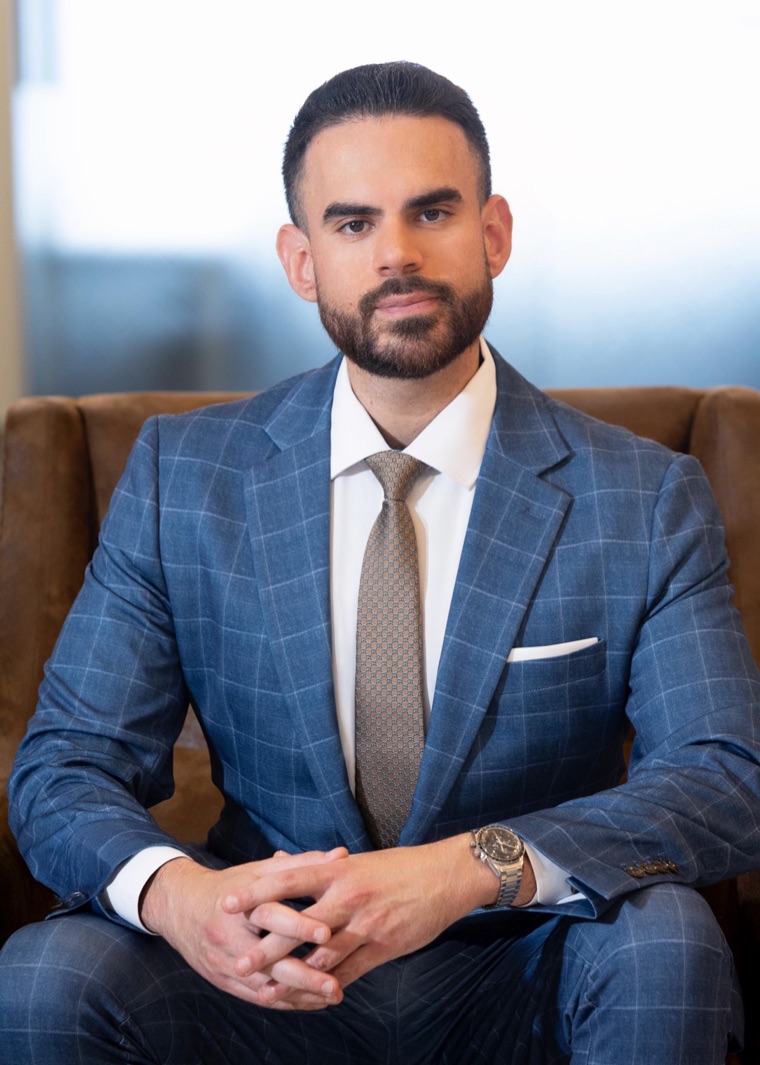
In early 2025, Tarras went to trial solo in the Southern District of Florida against three senior federal prosecutors, backed by multiple agents and support staff. The case: a nine-week healthcare fraud prosecution. His co-defendant sat at counsel table flanked by four attorneys from Nelson Mullins, war room and all. Tarras operated from an Airbnb in Little Havana with a ChatGPT subscription and a stack of encrypted drives. The difference in resources was extreme. The difference in trial outcomes – less so. In a conversation with Arthur Rothrock on The Litigator's Path, Tarras details exactly how he used AI to process discovery dumps of 300-plus pages per night, draft motions overnight, build cross-examination charts, and generate trial demonstratives – work that would have required an army of associates and paralegals under the traditional big-firm model. The through line: AI is not a novelty for solo federal defense attorneys anymore. It is infrastructure.
How Tarras Built a Federal Practice Before Going Solo
Tarras began his career at the Palm Beach County Public Defender's Office, working his way through serious crimes – everything short of first-degree murder – and serving as second chair on several homicide cases. After three years, he moved to a private firm for a year to gain white-collar and federal experience, then joined Rawson Law Firm, where he spent five years building the firm's federal and white-collar practice from the ground up. The firm had been strictly state court criminal defense before Tarras arrived. By the time he left, he had built enough of a book of business to launch Tarras Defense with a clear focus: federal criminal defense and white-collar work exclusively, including appointments from the Criminal Justice Act (CJA) panel.
"I knew it was going to be competitive," Tarras says. "Southern District of Florida is the hub for healthcare fraud prosecutions. There are phenomenal boutique firms down here, and the big international firms have strong white-collar practices too." He launched anyway. Six months in, he has no assistant and still handles CJA appointments – cases where the government pays his fee because the defendant cannot afford counsel. It is a caseload model that works only if the solo practitioner has a system for managing discovery-heavy cases without drowning in paper. Tarras found his system in generative AI.
What a Federal Defense Practice Looks Like When You Are Truly Solo
Tarras runs a practice that includes indicted cases, pre-filing investigations, subpoena responses, and compliance work for clients trying to avoid criminal charges in the first place. "It takes a lot of keeping that phone on," he says. "It's not a nine-to-five." He keeps his caseload manageable – in air quotes – but "manageable" in federal criminal defense still means juggling high-stakes matters where one misstep can cost a client decades in prison. He has not hired an assistant yet, though he admits he is reaching the point where he needs one. For now, it is just Tarras and his AI models.
Before launching his firm, Tarras co-counseled a 10-week RICO trial brought by Florida's statewide prosecutor – a hybrid state-federal agency that handles cases spanning county lines but contained within Florida. The case had been pending since 2013. Tarras came on board in 2022, nearly a decade into the litigation. The client had cycled through multiple defense attorneys, and the case had been through four judges. Discovery was produced in boxes and binders – 40,000 pages of printed materials, old-school style. "It was like trying a case in 1980," Tarras recalls. "Paper and paper and paper." During the trial, he and his client rolled binders into the courtroom each day like civil litigators hauling deposition transcripts. There was no document review platform. The state's position was: if you want to see it, come by the office.
Looking back, Tarras says he would have digitized everything from day one. But the client had already spent eight years working a certain way, and previous counsel had set the workflow. "Time was a big factor," Tarras says. "Things were moving real fast." The case went to trial three times – six weeks of jury selection the first time without seating a jury, a day-one mistrial the second, and finally a 10-week trial in April 2024. By then, Tarras had started experimenting with AI. The difference was stark.
A Nine-Week Trial Against Three Prosecutors – And How Tarras Used AI to Keep Pace
The healthcare fraud trial in the Southern District of Florida was a different animal. Discovery was electronic – millions of pages on a drive – but there was no fancy document review system like Everlaw. "That's the thing about doing white-collar as a solo," Tarras says. "You don't have the institutional platform the big firms have, and your client might not be able to afford it." So Tarras built his own workflow using generative AI.
Under the Jencks Act, federal prosecutors are not required to produce witness statements until the night before the witness testifies. In state court, defense attorneys conduct depositions months in advance. In federal criminal cases, that option does not exist. "We don't get depositions absent someone being abroad," Tarras explains. "The discovery rules are insane. The conviction rate on the government side is so high not because their cases are airtight, but because the rules make it almost impossible to defend." Each night after trial, Tarras would return to his Airbnb and find a discovery dump waiting for him – often 300-plus pages of Jencks material for the next day's witness, plus rough transcripts from that day's testimony.
Tarras developed a system. He would plug the day's transcript into his AI platform along with the Jencks material – FBI 302 reports, witness statements from four years prior, interview notes. He would prompt the AI to identify inconsistencies, pull specific page and line numbers, and generate cross-examination charts. "Things I've done my whole career," he says, "but I've never done using AI and had to do it in real time." The AI learned his preferences. Early in the trial, he had to refine prompts constantly – yelling at the platform, as he puts it, to stop giving him PDF line numbers instead of document page numbers. A few weeks in, the system was dialed. "It got to know me really well," Tarras says. "Once it did, it was pretty consistent."
He still double-checked everything. Any quote that went into a filing, he verified himself against the transcript. But for processing discovery dumps overnight and building cross-examination frameworks, the AI was essential. "I wouldn't have been able to do the trial – at least not without ending up in a straitjacket – without being able to rely on that," he says.
How Tarras Generated Trial Demonstratives Using AI – And Why Visuals Matter
Tarras did not stop at document review. He used AI to create trial demonstratives for closing argument. His theme centered on a key government witness who had described herself as "the bridge" between Tarras's client and the co-defendant. On cross-examination, Tarras got her to admit that the two parties had not even been introduced to each other when she made that statement. "Bridges go somewhere," Tarras told the jury. "Unless you're going to Narnia – and this case is not Narnia, this doesn't have a wardrobe, this is court – people usually know who or what is on the other side of a bridge."
He fed the transcript excerpt into his AI platform along with the federal jury instruction on reasonable doubt and a description of his theme. After some trial and error, the platform generated an image of a bridge with missing planks – a visual representation of the prosecution's case. He used it during closing. "It was pretty fun," Tarras says. He also generated an image of a puzzle piece that did not fit, illustrating his opening argument that the government had jammed his client into a conspiracy where he did not belong.
Could the images have been more refined? Yes. Did they get the job done? Also yes. And they cost nothing but Tarras's time. No need to commission a graphics firm or spend hours hunting for clip art. The AI spun up custom demonstratives in minutes.
Where AI Stops and the Lawyer Starts: Why Tarras Does All Legal Research Himself
Tarras uses AI extensively for document processing, cross-examination prep, and trial demonstratives. He does not use it for legal research – at least not in the way most people imagine. "I don't let it touch case law unless I give it the case," he says. "And even then, I say, 'Do not quote a page. Any quotes you want to put, tell me.'" He has his own method for case law.
He has experimented with letting the AI generate citations on its own. "Maybe one in 10 was a real case," he recalls from early tests. The platforms have improved. Now, when he prompts for case law without feeding in the cases himself, the AI will at least return real citations. But it still misses the heart of the holding. "It will give me what I want to hear," Tarras says. If he tells the platform he is drafting a motion to dismiss on double jeopardy grounds and feeds it a case he thinks supports that argument, the AI will often return a summary that leans toward his position – even if that is not quite what the case stands for. "It was a very pro-David's-motion kind of holding," he says. "So it's going to be a long time before I'm confident."
Tarras also uses AI for theme and theory development – the one-liners and overarching narratives that structure opening statements and closings. "I'll give the platform the indictment and say, 'Give me 10 one-liners. Create me a theme and theory.' And ultimately, I'm going to give my own input. But the feedback is really good." He likens it to running ideas past a colleague down the hall – the way he used to at the public defender's office, where he had 30 lawyers to bounce ideas off. Now, the AI serves that function. It generates options. He picks the ones that resonate and workshops them from there.
The Problem With Mandatory AI Disclosure Rules in State Court
Both the 11th and 17th Judicial Circuits in Florida – Broward and Miami-Dade Counties, two of the highest-volume state court systems in the country – recently issued administrative orders requiring attorneys to disclose on the first page of any pleading if AI was used in drafting. The penalty for noncompliance: contempt, sanctions, or dismissal. "That's scary," Tarras says. "I don't know if that's going to make lawyers stop using AI or just lie about it."
Tarras sees the rule as a solution in search of a problem. "We already face the same consequences if we file a motion with bad case law or an untenable position or the wrong transcript," he says. "So what does that stamp of AI mean to the judges? I understand it in the pro se context – there have been cases of pro se litigants generating fake lawyers making speeches. But as members of the bar, we're already held to the standard. If you're doing your job anyway, which you should be – checking the case law, verifying everything – I don't see what the point is."
Tarras is hesitant to certify AI use in a criminal case. "When my client's freedom is on the line and this motion can mean the difference, I'm not ready to tell a judge I used AI. Who knows how the judge is going to take it?" He wonders if the disclosure requirement could be challenged as unfairly prejudicial to the client. No federal district where Tarras practices has adopted a similar rule yet. If they do, he says, it could pour cold water on AI adoption – even though attorneys already have a duty to verify everything they file.
What Federal Defense Attorneys Can Take Away
-
Jencks material can be processed overnight using AI to build cross-examination charts and identify inconsistencies between witness statements and trial testimony – work that would otherwise require multiple associates and paralegals working through the night. Tarras used AI to compare 300-plus-page discovery dumps with that day's trial transcript, pulling page and line numbers for impeachment in real time.
-
AI-generated trial demonstratives cost nothing but time and can be customized in minutes, not days. Tarras fed his opening and closing themes into an AI platform along with key transcript excerpts and generated visuals – including a bridge with missing planks and a puzzle piece that did not fit – without hiring a graphics firm or hunting for stock images.
-
Legal research should still be done by the attorney, not the AI. Tarras feeds cases to the AI platform only after he has researched and identified them himself, then uses the platform to draft arguments in his voice. Even then, he verifies every quote and citation before filing. AI-generated case law summaries tend to reflect what the attorney wants to hear, not necessarily what the case holds.
-
Solo practitioners can compete with big-firm resources in document-heavy federal cases if they build AI workflows early. Tarras went to trial against a four-attorney Nelson Mullins team with a war room and full support staff. He had an Airbnb and a ChatGPT subscription. The difference in resources was extreme. The difference in trial preparation quality – less so.
-
State court mandatory AI disclosure rules may create more problems than they solve, particularly in criminal cases where disclosure could unfairly prejudice the client. Tarras argues that attorneys already face sanctions for filing bad case law or unsupported motions, and requiring a disclosure stamp adds no additional safeguard – only potential bias from judges who may view AI use negatively.
Listen to the Full Episode
Hear the full conversation with David Tarras on The Litigator's Path at legion.law/podcasts or wherever you get your podcasts. Learn more about Tarras Defense at tarrasdefense.com, and connect with David Tarras on LinkedIn or YouTube, where he publishes explanations of federal and white-collar criminal law topics.